All posts by Merch Informer Guides

Mockup Truth: What to Show So Buyers Trust You (Without Overpromising)
Mockups are the strangest part of POD. They aren’t the product… but they’re the only product the buyer can touch before money leaves their account. And because POD is already a leap of faith (“I can’t hold it, I can’t feel it, I’m trusting a stranger and a printing pipeline”), mockups don’t just sell the item. They sell certainty. That’s why “pretty” mockups can actually hurt you if they feel too perfect. Buyers rarely say, “This mockup seems unrealistic, therefore I will not purchase.” They do something quieter: they hesitate. They open a new tab. They keep scrolling. They tell themselves they’ll come back later… and they don’t. Mockup truth is simply this: make your product look good, but make […]

Read more

The “Hero Product” Strategy: Pick One Anchor Product Per Niche

Most POD sellers don’t struggle because they can’t come up with ideas. They struggle because they come up with too many—spread across too many products, too many niches, too many “maybe this will work” experiments. That’s where the Hero Product strategy saves your sanity. A hero product is the one product format that best fits a niche’s buying behavior—the one thing that becomes your anchor. Once you pick it, everything else becomes easier: your design decisions, your mockups, your listing language, even your product expansion. Think of it like casting a movie. You can have a great supporting cast, but you need one lead role that carries the story. Why a hero product works Because every niche has a “default […]

Read more

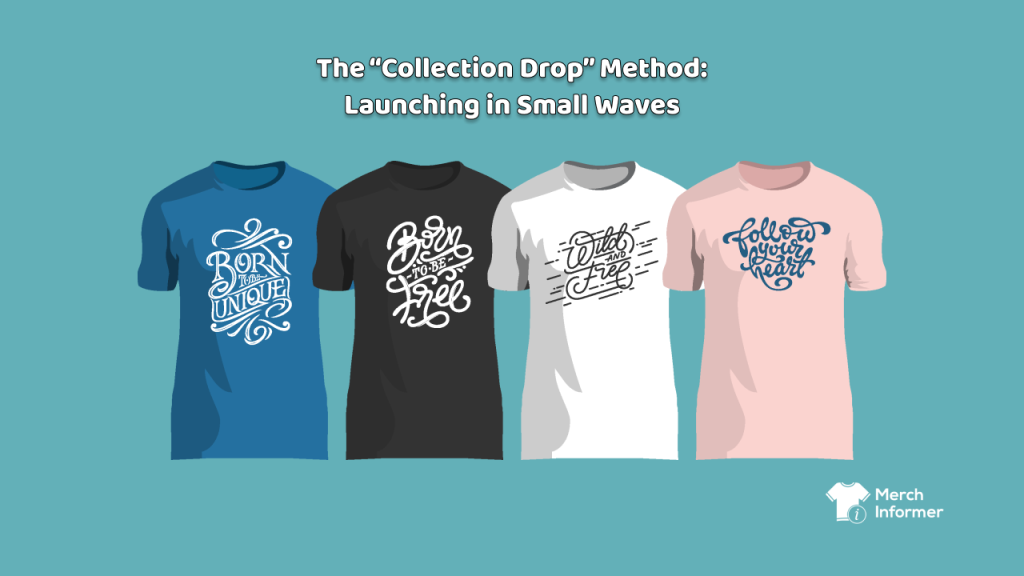
The “Collection Drop” Method: Launching in Small Waves

There’s a particular kind of exhaustion that hits POD sellers who are doing everything “right.” You’re designing. You’re uploading. You’re posting consistently. You’re trying new product types. You’re tweaking keywords. You’re staying busy. And yet it still feels like you’re throwing paper airplanes into a hurricane. That feeling usually has nothing to do with your creativity. It has to do with how you’re releasing your work. Most POD sellers launch the way people clean their closets: in a frantic weekend burst where everything ends up in piles, nothing has a label, and by Sunday night you’re sweaty, annoyed, and not sure anything actually improved. A Collection Drop is the opposite. It’s a calm release strategy that makes your shop feel […]

Read more

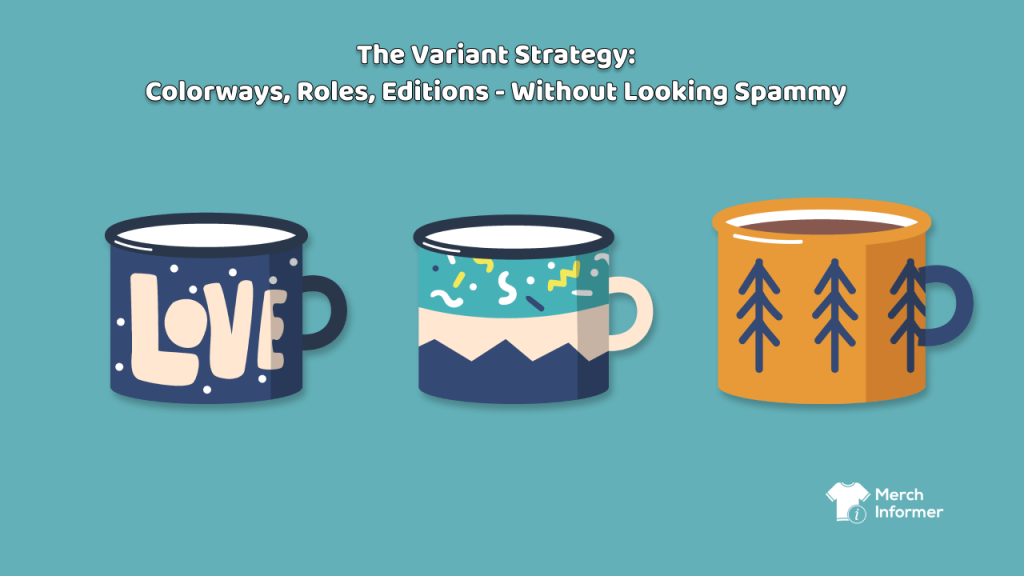
The Variant Strategy: Colorways, Roles, Editions – Without Looking Spammy

If POD had a “silent killer,” it wouldn’t be competition. It would be self-inflicted clutter. Because the moment you find a design that sells, a very human thought shows up: “Great. Now I should make a bunch of versions.” And you should—because that’s how catalogs grow. But there’s a line you don’t want to cross: the moment your shop starts to feel like an endless hallway of the same listing wearing different hats. Buyers get tired. You start competing with yourself. The shop stops feeling curated and starts feeling noisy. A strong variant strategy avoids that. It scales what works while keeping your storefront feeling intentional—like a brand, not a slot machine. To do it right, you need to be […]

Read more

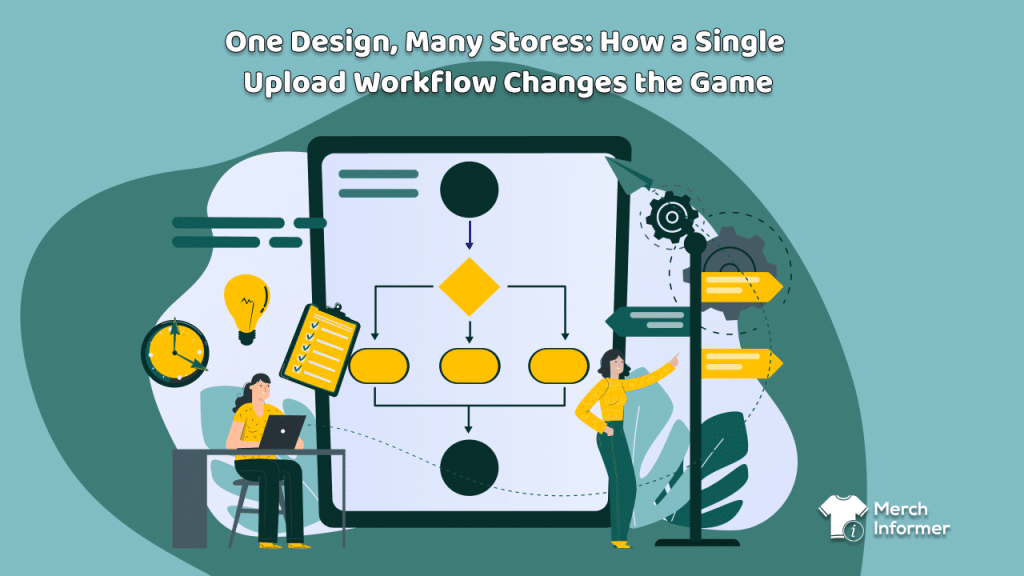
One Design, Many Stores: How a Single Upload Workflow Changes the Game

POD doesn’t get hard because design is hard. POD gets hard because repetition is hard. The part that burns people out isn’t making one good design — it’s doing the same “admin loop” over and over: upload again rewrite the same listing again re-enter keywords again re-check variants again track where you posted again That’s where creators quietly stall out. And it’s sneaky, because from the outside it looks like you’re “doing the work.” You’re busy. You’re posting. You’re tweaking. You’re optimizing. But inside, the energy drain feels like this: “Why does this take so much effort for so little output?” That question is the beginning of burnout. A single-upload mindset changes everything because it shifts POD from “random posts” […]

Read more

The “Low Risk Product Ladder”: Testing Categories Without Going Broke

One of the sneakiest POD mistakes is testing too expensively. Not “expensively” in the sense of buying pallets of inventory (thank goodness POD saves us from that), but expensively in the sneaky way that drains creators just as fast: You pick a product category that sounds exciting, invest energy building a whole line, and then discover: the audience didn’t actually want that format the price point doesn’t work the mockups didn’t sell it the category doesn’t fit the niche And suddenly you’re sitting there with a folder full of designs you don’t feel like touching again, because your brain associates them with wasted effort. The solution isn’t “never experiment.” It’s to experiment with a low risk product ladder — a […]

Read more

Seasonal Category Planning: What to Launch By Quarter

Most POD sellers don’t fail because their designs are bad. They fail because they launch late. And I don’t mean “late” in a moral, hustle-culture way. I mean late in the same way you’d be “late” to a party if you showed up after everyone already ate the cake. The opportunity is still technically there… but the moment has passed, the buying urgency has cooled, and you’re fighting uphill against sellers who were ready earlier. Seasonal selling isn’t about making “holiday designs.” It’s about understanding that buyer intent changes throughout the year—and choosing product categories (and messages) that match the season’s mood. Because shoppers don’t buy the same way in January as they do in October. They don’t browse the […]

Read more

Product Pages That Convert: The POD Listing Elements Most People Skip

A POD listing can be “technically fine” and still fail to convert. Why? Because buyers don’t buy files. They buy certainty. They need to feel: “This will look like the photo.” “This fits my person.” “This shop is legit.” “I know exactly what I’m getting.” And if they don’t feel that certainty, they do what every online shopper does in 2026: They back out, keep scrolling, and forget you existed. That’s not a character flaw in the buyer. It’s normal. And it’s why conversion isn’t about hype or cleverness. It’s about removing anxiety from the purchase. Think about how POD shopping feels from the buyer’s side. They’re buying something they can’t touch yet—often from a seller they’ve never met—based on […]

Read more

The “Creator Catalog” Strategy: Building a Cohesive Brand Across Products

building a brand

With more product options opening up across the print-on-demand ecosystem, it’s never been easier to list a lot of items. The harder—and more profitable—move is to build a catalog: a cohesive, recognizable body of products that feels like it comes from a real creator brand, not a random generator of listings. That’s the difference between a shop that gets occasional hits… and a shop that builds repeat buyers. Let’s talk about how the Creator Catalog strategy works, why it raises trust (and AOV), and how to build it without turning your workflow into chaos. What a “creator catalog” actually is A creator catalog is not “a bunch of designs.” It’s a small universe with rules: a consistent niche focus (or […]

Read more

Quality Control in POD: What You Can Control (and What You Can’t)

Print-on-demand is one of the greatest “small business miracles” ever invented. You can create a design tonight, list it tomorrow, and make a sale without buying inventory, renting space, or gambling hundreds of dollars on a big upfront order. For a lot of people—especially busy, real-life humans with budgets—POD is the first time “starting a product business” has felt possible. But POD has a trapdoor. Because the ease and immediacy can make you forget something important: You’re still selling a physical product. And physical products have limitations. With POD, quality control isn’t something you “fix later.” It’s something you prevent up front, because you don’t get the same safety nets a traditional product business gets—press checks, factory approvals, or hands-on […]

Read more